

Australia's AI-Powered Growth Agency

AI-POWERED DIGITAL GROWTH FOR AUSTRALIAN BUSINESSES

ZeekWeb Australia helps businesses scale through web development, AI automation, SEO, branding, eCommerce, and intelligent digital systems.

AI AssistantOnline
Hello! How can I help you today?
Powered by AI · Verify critical details with our team
Projects Delivered
0 +
Client Satisfaction
0 %
Years Experience
0 +
Industries Served
0 +
Trusted by
4.9 google

What We Do

DIGITAL SERVICES THAT DRIVE GROWTH

WordPress Development

Build a fast, secure, SEO-ready WordPress website that attracts customers, generates leads, and scales your business.

Web Development

Custom high-performance websites built with modern stacks — fast, SEO-ready, and conversion-optimised.

AI Solution

Intelligent workflows and AI systems that eliminate repetitive work and scale your operations automatically.

SEO Services

Data-driven SEO that ranks your business higher and delivers qualified organic traffic every month.

Shopify development

Build AI-powered Shopify stores that boost conversions, attract customers, and scale your business effortlessly.

AI Automation

Streamline operations with AI by automating tasks, qualifying leads, and enhancing customer interactions.

Why Choose Us

A DIFFERENT KIND OF DIGITAL AGENCY

International-quality execution with genuine Australian local understanding. Transparent, fast, and growth-focused.

❌  TRADITIONAL AGENCIES
✗  Long retainers, painfully slow delivery cycles
✗  Generic strategies, no real business context
✗  Poor communication and opaque timelines
✗   Locked-in contracts with little flexibility
✗   Outdated tech stacks and old design approaches
✗   No clear ROI measurement or transparent reporting
✗   One-time project, no ongoing growth support
✅  ZEEKWEB AUSTRALIA
Agile delivery with clear milestones and fast turnarounds
Custom strategies built around your goals and market
Transparent comms with weekly progress updates
Flexible engagements shaped around your needs
Modern stack — AI, Shopify, React, and leading tool,
Data-driven reporting with clear KPIs every month
Long-term growth partner genuinely invested in yo

Case Studies

REAL RESULTS FOR REAL BUSINESSES

Proof, not promises. Here's how we've helped Australian businesses grow.

shopify development
2 Weeks
Luxury Furniture & Interior Decor Store

How ZeekWeb transformed Izza Living’s online presence into a high-converting, modern Shopify store with streamlined UI, interactive product showcase, and multi-device optimization.

+210%
Conversions
1.2s
Load Speed
96/100
PageSpeed
service
5 Weeks
Dinosaur - Bespoke Kitchens & Renovations

Our team designed and developed a modern, visually engaging website for Dinosaur, Ireland’s trusted experts in bespoke kitchens and home renovations. The new website reflects over 20 years of craftsmanship, combining elegant design with clear structure to showcase their expertise in creating beautiful, functional living spaces across Ireland.

+240%
Enquiries
0.7s
Load Speed
98/100
PageSpeed
b2b
6 Weeks
Fiber Optic & LED Lighting Solutions

How ZeekWeb transformed a freshly registered domain name  into a high-converting global B2B catalog for star ceiling fiber optics, outdoor LED spotlights, IP68 pool lights, and DMX512 smart controllers.

+295%
B2B Leads
0.6s
Load Speed
99/100
PageSpeed

AI & Innovation

BUILT FOR THE AI-FIRST ERA

We integrate cutting-edge AI systems into your business operations — making you faster, smarter, and more competitive than ever before.

Zeekweb
AI

AI Agents & Virtual Assistants

24/7 customer support, lead qualification, and bookings – fully handled by intelligent AI.

Smart Workflow Automation

Eliminate repetitive tasks with custom Make, n8n, and Zapier automations built for your operations.

AI-Powered Marketing Systems

Content generation, ad optimisation, and personalised campaigns driven by machine learning.

Business Intelligence Dashboards

Real-time data insights that let you make fast, confident, data-backed business decisions.

ZeekWeb AI Metrics
4.2×

Avg ROI 

24/7

AI Active

98%

Uptime

Admin Tasks

Lead Gen

0 %

Automation

0 %

SEO Traffic

0 %

↑ ROI Proven

Real-time

Enterprise Grade

AU-Focused

Client Reviews

REAL WORDS FROM REAL CLIENTS

Australian business owners trust ZeekWeb to deliver. Here's what they say.

★★★★★

“ZeekWeb completely transformed our online presence. Bookings increased by over 200% within four months. The team was communicative, professional, and genuinely invested in our growth.”

SJ
Sarah Johnson

Founder, Bloom Wellness Studio — Sydney

★★★★★

“The AI automation system saves us 15 hours a week. Customer response time dropped from hours to minutes. Best digital investment we’ve ever made — bar none.”

MC
Marcus Chen

Director, Pacific Trade Solutions — Melbourne

★★★★★

“Revenue doubled in six months after ZeekWeb rebuilt our Shopify store. The branding refresh gave us the professional edge we were missing. Couldn’t be happier.”

AL
Amanda Liu

CEO, The Label Studio — Brisbane

★★★★★

“What impressed me most was how well they understood our local market while delivering world-class quality. ZeekWeb isn’t just an agency — they’re a genuine business partner.”

TR
Tom Reynolds

Managing Director, ResTech Group — Perth

★★★★★

“SEO results were visible within weeks, not months. ZeekWeb’s transparent reporting and clear communication made the whole experience completely stress-free.”

JP
Jessica Park

Owner, Northside Dental Clinic — Adelaide

★★★★★

“Our cost per acquisition dropped 40% and lead quality improved dramatically after ZeekWeb rebuilt our site. The performance marketing team is outstanding — genuinely exceptional.”

DW
David Walsh
COO, CoreBuild Construction — Gold Coast

How We Work

A CLEAR, STRUCTURED PROCESS

No surprises. Every project follows a proven system that keeps you informed and in control.

01

Discovery

Deep dive into your business, goals, audience, and competitive landscape to uncover opportunities.

02

Strategy

A clear, actionable roadmap aligned to your objectives, timeline, and growth targets.

03

Design

Premium, conversion-focused design with your brand at the centre of every decision.

04

Development

Clean, performant code built on modern tools, best practices, and future-proof architecture.

05

Launch

Rigorous QA, thorough testing, and a smooth coordinated go-live you can trust completely.

06

Growth Support

Ongoing optimisation, reporting, and strategic scaling support to keep your business growing.

Latest Insights

AI, Web Design & Digital Growth Insights

Discover expert insights on AI, web design, SEO, automation, and digital marketing to help your business grow smarter and faster.

Millions of people now open ChatGPT before they open Google. They ask it for product recommendations, service providers, comparisons, and advice — and instead of scrolling through ten blue links, they get a single, confident answer with a handful of sources baked in. This shift is why Generative Engine Optimization (GEO) has become just as important as traditional SEO. If your website isn’t structured, authoritative, and easy for AI models to understand, you simply won’t be part of that answer. This guide breaks down exactly how ChatGPT chooses which websites to reference, and the practical steps you can take to earn a spot in those answers — without abandoning the SEO fundamentals that still matter for Google.


What Does Ranking on ChatGPT Mean?

“Ranking on ChatGPT” doesn’t work the way ranking on Google does. There’s no page one, no ten blue links, and no position #1 you can track in a rank tracker. Instead, ChatGPT recommends what it considers the most trustworthy, relevant, and well-supported sources for a given question.


A few key differences to understand:

  • Google Search returns a ranked list of pages based on hundreds of algorithmic signals, and the user chooses which to click.
  • AI-generated answers synthesize information from multiple sources into one response, citing only the sources the model judged most reliable and relevant.
  • ChatGPT selects websites based on a mix of content clarity, topical authority, brand reputation, and how easily its systems can extract accurate information from a page.

In short, you’re not competing for a ranking position — you’re competing to be considered a credible, citable source on your topic.


How ChatGPT Finds Information

ChatGPT draws on several layers of information to generate answers:

  • Traditional search index knowledge — patterns learned from large-scale training data, including well-established, frequently referenced websites.
  • Live web search — for current queries, ChatGPT can pull real-time results from the web, similar to a search engine crawl.
  • Trusted sources — established publications, government sites, recognized industry authorities, and well-documented brands are favored.
  • Brand mentions — how often and how positively your brand is mentioned across the web (news, forums, review sites, other blogs) shapes how “known” and trustworthy your business appears.
  • Structured content — clearly organized pages with headings, lists, and direct answers are easier for AI systems to parse and quote accurately.
  • Bing/OpenAI search ecosystem — ChatGPT’s web search features rely heavily on Bing’s index, so appearing in Bing search results (and Bing Webmaster Tools data) directly affects your visibility in AI answers.

Why Traditional SEO Is No Longer Enough

Ranking on Google used to be the whole game. Now, businesses need to think about a broader ecosystem of visibility:

  • AI Search — search experiences powered by large language models rather than traditional keyword-matching algorithms.
  • GEO (Generative Engine Optimization) — the practice of optimizing content so it gets surfaced and cited inside AI-generated answers.
  • AEO (Answer Engine Optimization) — structuring content to directly answer specific questions, ideal for both voice search and AI summaries.
  • Semantic Search — search engines and AI models now understand meaning and context, not just exact-match keywords.
  • Entity SEO — optimizing around recognizable entities (your brand, products, people, and concepts) so AI systems can confidently associate you with your area of expertise.
  • Brand authority — consistent, credible presence across the web that signals to AI systems you’re a legitimate, trustworthy source.

Businesses that only optimize for Google’s traditional algorithm are increasingly invisible in the AI-driven discovery layer that’s rapidly growing alongside it.


12 Proven Ways to Rank Your Website on ChatGPT

1. Publish Helpful Expert Content

Why it matters: ChatGPT prioritizes content that genuinely solves a problem or answers a question, written from real expertise rather than generic filler.

Best practices: Write from firsthand experience, include original insights or data, and answer the question thoroughly in the first few sentences.

Common mistakes: Publishing shallow, generic articles that repeat what’s already all over the web.

Pro tip: Add a clear, quotable summary near the top of each page — AI models often lift the most direct, self-contained sentence as the citation.

2. Build Topical Authority

Why it matters: AI models favor sites that cover a subject comprehensively, not just a single article.

Best practices: Create content clusters — a pillar page supported by multiple related articles — around your core topics.

Common mistakes: Publishing isolated, disconnected blog posts with no thematic consistency.

Pro tip: Interlink your cluster content so both search engines and AI crawlers can see the full scope of your expertise.

3. Answer Questions Clearly

Why it matters: ChatGPT often pulls direct answers to specific questions, especially in FAQ-style formats.

Best practices: Use question-based subheadings and answer them in 2–3 concise sentences immediately below.

Common mistakes: Burying the answer under long introductions or requiring users to read the whole article to find it.

Pro tip: Mirror the exact phrasing people use when asking ChatGPT questions — conversational, natural language works better than stiff keyword phrases.

4. Use Proper Heading Structure

Why it matters: Clean heading hierarchy (H1, H2, H3) helps AI systems understand how your content is organized and what each section covers.

Best practices: One H1 per page, logical H2/H3 nesting, and descriptive headings that reflect real questions or subtopics.

Common mistakes: Skipping heading levels, using vague headings like “More Info,” or stuffing keywords unnaturally into headings.

Pro tip: Structure headings as questions where relevant — it doubles as both an SEO and AEO tactic.

5. Add Schema Markup

Why it matters: Structured data (schema) helps search engines and AI crawlers understand your content’s context, entities, and relationships.

Best practices: Implement FAQ schema, Article schema, Organization schema, and Product schema where relevant.

Common mistakes: Leaving schema out entirely, or implementing it incorrectly so it fails validation.

Pro tip: Validate every schema type before publishing — broken markup can do more harm than having none at all.

6. Improve Technical SEO

Why it matters: If ChatGPT’s crawlers (or Bing’s, which power its live search) can’t access or render your site properly, your content won’t be considered at all.

Best practices: Ensure fast load times, mobile responsiveness, clean XML sitemaps, and crawlable robots.txt settings.

Common mistakes: Blocking crawlers unintentionally, slow page speed, or broken internal links.

Pro tip: Run regular technical audits — a single misconfigured robots.txt file can quietly remove your entire site from consideration.

7. Build High-Quality Backlinks

Why it matters: Backlinks from reputable sites remain one of the strongest authority signals, both for Google and for AI training/search data.

Best practices: Earn links through original research, expert contributions, digital PR, and genuine industry partnerships.

Common mistakes: Relying on low-quality, spammy link-building tactics that can damage trust signals.

Pro tip: Prioritize a smaller number of links from highly relevant, respected sites over a large volume of low-quality ones.

8. Increase Brand Mentions

Why it matters: Even unlinked mentions of your brand across the web help reinforce your credibility and recognizability to AI systems.

Best practices: Pursue press coverage, podcast appearances, guest posts, and community engagement (forums, Reddit, industry groups).

Common mistakes: Focusing solely on your own website and ignoring your presence elsewhere on the web.

Pro tip: Monitor brand mentions regularly so you can engage with and amplify positive coverage.

9. Keep Content Fresh

Why it matters: Outdated information reduces trust and relevance, especially for topics that change frequently (like AI SEO itself).

Best practices: Review and update key pages on a regular schedule, refreshing statistics, examples, and recommendations.

Common mistakes: Publishing “evergreen” content once and never revisiting it.

Pro tip: Add a visible “last updated” date — it signals freshness to both readers and AI systems.

10. Optimize for Bing & AI Crawlers

Why it matters: ChatGPT’s live search functionality relies heavily on Bing’s index, making Bing optimization directly relevant to AI visibility.

Best practices: Submit your sitemap to Bing Webmaster Tools, verify your site, and monitor crawl and indexing status.

Common mistakes: Focusing exclusively on Google Search Console while ignoring Bing entirely.

Pro tip: Check that your robots.txt explicitly allows known AI crawler user-agents where you want visibility.

11. Improve E-E-A-T Signals

Why it matters: Experience, Expertise, Authoritativeness, and Trustworthiness (E-E-A-T) shape whether AI models treat your content as a reliable source.

Best practices: Include author bios, credentials, transparent sourcing, and clear contact/about information.

Common mistakes: Publishing anonymous content with no clear authorship or accountability.

Pro tip: Link author profiles to real credentials, social profiles, or published work to reinforce legitimacy.

12. Create AI-Friendly Content Formats

Why it matters: Certain formats are simply easier for AI models to extract and summarize accurately.

Best practices: Use bullet points, numbered lists, comparison tables, and concise summary boxes throughout longer articles.

Common mistakes: Writing dense, unbroken paragraphs that bury key information.

Pro tip: End key sections with a short “in summary” sentence — it’s often the exact sentence AI systems will cite.


SEO vs GEO vs AEO

SEO GEO AEO
Goal Rank high in search engine results pages Get cited or referenced in AI-generated answers Provide direct answers to specific questions
Ranking Method Algorithmic ranking of pages (Google, Bing) AI model selection based on trust and clarity Structured Q&A matching for featured snippets and voice search
Traffic Source Organic search clicks AI chat referral traffic and brand visibility Featured snippets, voice assistants, AI summaries
Optimization Techniques Keywords, backlinks, technical SEO, on-page SEO Structured content, authority building, brand mentions, schema Clear Q&A formatting, concise answers, FAQ schema
Success Metrics Rankings, organic traffic, click-through rate Citation frequency, AI referral traffic, brand visibility Snippet appearances, voice search results, answer accuracy

Common Mistakes That Prevent ChatGPT Rankings

  • Publishing thin, low-value content
  • Keyword stuffing instead of writing naturally
  • Missing or broken structured data
  • Weak overall domain and author authority
  • Outdated or inaccurate information
  • Poor internal linking structure
  • Lack of external citations or references
  • Ignoring emerging AI search trends

Best Tools for ChatGPT SEO

  • Google Search Console — monitor indexing, queries, and technical health
  • Bing Webmaster Tools — essential since Bing powers much of ChatGPT’s live search
  • Google Analytics 4 — track referral traffic, including from AI platforms
  • Ahrefs — backlink analysis and content gap research
  • SEMrush — keyword research and competitive analysis
  • Screaming Frog — technical SEO audits and crawl diagnostics
  • Schema Validator — verify structured data implementation
  • PageSpeed Insights — measure and improve site speed and Core Web Vitals

AI SEO Checklist

  • Technical SEO completed (crawlability, speed, mobile-friendliness)
  • Schema markup added and validated
  • Fast-loading website
  • Genuinely helpful, expert-level content
  • Strong internal linking structure
  • External citations and credible references
  • Regular content updates
  • Established brand authority and mentions
  • Optimized images with descriptive alt text
  • Strong E-E-A-T signals across the site

Conclusion

AI search is fundamentally reshaping how people discover businesses, products, and services. Rather than clicking through search results, users are now getting direct, synthesized answers — and only the most trustworthy, well-structured websites make it into those responses. The path forward isn’t choosing between Google SEO and AI visibility; it’s combining both. By publishing genuinely helpful content, building topical authority, strengthening technical foundations, and reinforcing E-E-A-T signals, your website can earn a place not just on Google’s results page, but inside the AI-generated answers millions of people now rely on every day.

Frequently Asked Questions

How do I get my website to appear in ChatGPT? Focus on publishing clear, authoritative content, use proper structure and schema markup, build genuine backlinks and brand mentions, and ensure your site is technically accessible to crawlers, including Bing’s.

Does ChatGPT use Google rankings? Not directly. ChatGPT’s live search relies primarily on Bing’s index rather than Google’s, though strong SEO fundamentals benefit both.

What is Generative Engine Optimization (GEO)? GEO is the practice of optimizing content so it’s more likely to be selected, referenced, or cited within AI-generated answers rather than just ranked in traditional search results.

Is traditional SEO still important for AI search? Yes. Technical SEO, authority building, and quality content remain foundational — GEO and AEO build on top of solid SEO practices rather than replacing them.

How often should I update content for ChatGPT visibility? Review key pages at least every few months, and update immediately when facts, statistics, or industry standards change.

Does schema markup help ChatGPT understand my website? Yes. Structured data helps clarify your content’s context and relationships, making it easier for AI systems to extract accurate information.

Can small businesses rank in ChatGPT? Yes. Authority and trust matter more than size — a small business with clear, expert, well-structured content can be cited over a larger competitor with weaker content.

What’s the difference between SEO, AEO, and GEO? SEO focuses on ranking in search engine results, AEO focuses on directly answering specific questions, and GEO focuses on being cited within AI-generated answers. They overlap but target different discovery channels.

How do backlinks affect AI search visibility? Backlinks from reputable, relevant sites reinforce your site’s authority and trustworthiness, both of which influence whether AI models consider you a credible source.

Which AI search engines should businesses optimize for? ChatGPT, Google’s AI Overviews, Microsoft Copilot, and Perplexity are the primary AI search experiences worth optimizing for today.
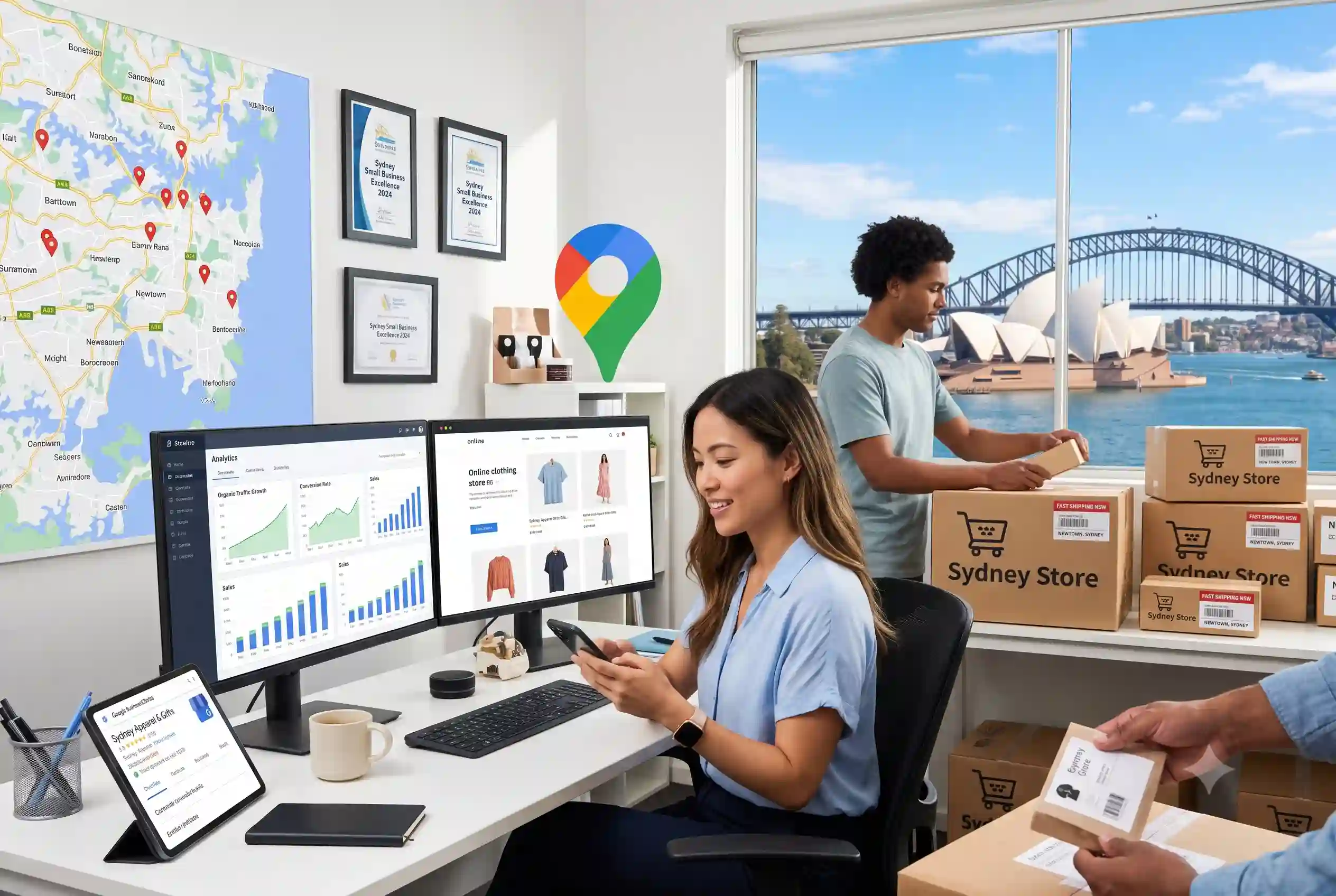
 

Online shopping in Sydney has grown rapidly as more consumers prefer the convenience of buying from local online stores. That rise in demand has made the ecommerce landscape more competitive: more stores, more product pages, and more paid ads fighting for customer attention. SEO (search engine optimization) is a long-term investment that helps Sydney-based online stores attract qualified visitors, reduce dependence on paid channels, and convert more searches into sales.

What Is eCommerce SEO?

eCommerce SEO focuses on optimizing online stores so product, category, and informational pages rank higher in search engines for relevant queries. The goal is to drive organic traffic with strong purchase intent.

How it differs from traditional SEO
While classic SEO often targets informational pages and brand awareness, ecommerce SEO must handle large numbers of product pages, structured data, price and availability signals, and conversion-focused design. It balances attracting traffic with optimizing for transactions.

Key components

  • Product page optimization: title tags, meta descriptions, unique product descriptions, high-quality images, and clear CTAs.
  • Category page optimization: useful copy, hierarchy that reflects search intent, and internal linking to subcategories and best sellers.
  • Technical SEO: crawlability, XML sitemaps, canonical tags, pagination handling, and fast server response.
  • Content marketing: buying guides, comparison posts, and blog content that captures mid-funnel and long-tail queries.

Benefits of SEO for eCommerce Websites

Increase Organic Traffic
Ranking higher on Google brings targeted visitors searching for products you sell. Organic search often delivers the largest share of long-term, repeatable traffic for online stores. For Sydney shops, capturing local and national queries can multiply site visits without recurring ad spend.

Higher Sales & Revenue
Searchers for specific products often have high purchase intent. Optimized product and category pages capture these buyers at the moment they’re ready to purchase, directly increasing sales and average order value.

Lower Marketing Costs
Paid ads drive immediate traffic but require continuous spend. SEO is an investment that compounds: once you rank well, you keep receiving organic traffic without the same daily cost-per-click, improving lifetime customer acquisition costs.

Build Brand Trust
Shoppers trust sites that appear on the first results page. Strong organic visibility and rich snippets (ratings, availability) make your store appear credible and professional to Sydney buyers.

Better User Experience
SEO improvements often overlap with UX wins: faster pages, mobile-friendly design, clear navigation, and accessible content. Meeting Core Web Vitals and mobile performance standards reduces bounce rates and improves conversions.

Long-Term Results
Paid campaigns stop the moment you stop funding them. SEO delivers sustained visibility and traffic growth over months and years, making it a cornerstone of a durable ecommerce strategy.

Why Local SEO Matters for Sydney eCommerce Businesses

Google Business Profile
Even for online-first stores, a well-optimized Google Business Profile helps local visibility for queries like “buy [product] near me” or “same day delivery Sydney.” It builds trust and surfaces local fulfilment options.

Local keywords
Adding Sydney-specific keywords (e.g., “Shopify store Sydney,” “same day delivery Sydney”) helps you capture customers who prefer local sellers or need faster shipping.

“Near me” searches
Many buyers use “near me” or “close to me” modifiers to find sellers that can offer quick delivery or pickup. Local SEO tactics help your product pages and landing pages show up for these queries.

Local backlinks
Partnerships with local blogs, directories, and trade associations strengthen your domain authority for regional searches and create referral traffic from Sydney-based audiences.

Sydney customer trust
Local signals, clear shipping policies for NSW, and Australian pricing boost buyer confidence and reduce friction at checkout.

Essential eCommerce SEO Strategies

Keyword Research
Target transactional and long-tail queries. Map keywords to product and category pages. For Sydney, include local modifiers and intent-based phrases like “buy,” “best,” “cheap,” and “same day.”

Product Page Optimization

  • Unique product titles and meta descriptions incorporating primary keywords.
  • Detailed, benefit-focused product descriptions that address features, specs, and common buyer questions.
  • Structured product data (schema) for price, availability, and reviews to gain rich snippets.
  • High-resolution images with descriptive alt text and filenames.
  • Clear CTAs and trust signals (returns policy, free shipping thresholds, SSL badge).

Category Page Optimization

  • Descriptive headings and short copy that explain the category and target intent.
  • Internal links to best-selling products and related categories.
  • Pagination or filtering handled with canonical tags to avoid duplicate content.

Technical SEO

  • Fast-hosting, optimized images, and a CDN for Sydney users.
  • Mobile-first design and responsive layouts.
  • XML sitemaps and robots.txt configured for product feeds and seasonal pages.
  • Proper canonicalization, hreflang if you target multiple regions, and server-side rendering for JS-heavy stores.

Internal Linking
Use internal links to pass authority from high-traffic pages to new or underperforming product pages. Create contextual links from blog posts to product pages and cross-link complementary products.

Image SEO
Compress and lazy-load images, use descriptive alt attributes, and serve WebP where possible. Optimized images speed up pages and improve visual search visibility.

Schema Markup
Add Product, Offer, AggregateRating, BreadcrumbList, and FAQ schema to increase the chance of rich results and improve CTR on SERPs.

Content Marketing
Create buying guides, comparison pages, how-to posts, and local content aimed at Sydney shoppers. Content attracts links and answers customer questions earlier in the purchase journey.

Link Building
Earn links through product reviews, partnerships, supplier pages, and local directories. High-quality backlinks remain a core ranking signal for competitive ecommerce keywords.

Common eCommerce SEO Mistakes

Duplicate product descriptions
Using manufacturer copy across thousands of listings creates duplicate content issues. Write unique descriptions or append unique value propositions and local flavour.

Thin content
Pages with minimal text (e.g., only product specs) struggle to rank. Add useful content like usage tips, FAQs, and buying advice.

Slow website
Large images, unoptimized scripts, and poor hosting slow load times, increasing bounce rates and harming rankings.

Missing metadata
Neglecting title tags, meta descriptions, and H1s leaves search engines and users confused about page intent.

Poor internal linking
Without clear internal links, crawlers struggle to find deep product pages and authority doesn’t pass efficiently.

Broken links
Dead pages create bad UX and crawl waste. Regularly audit and fix 4xx errors.

No schema markup
You miss opportunities for rich results that increase click-through rates.

Ignoring mobile optimization
Most shoppers use phones. A non-responsive checkout or slow mobile speed kills conversions and rankings.

Why Choose ZeekWeb for eCommerce SEO in Sydney?

  • AI-powered SEO strategies: ZeekWeb uses AI tools to scale keyword research, content generation, and performance forecasting—delivering data-driven plans tailored to Sydney retailers.
  • Shopify SEO: Deep experience with Shopify stores, optimizing theme structure, metafields, and Shopify-specific schema to increase visibility.
  • WooCommerce SEO: Technical audits, speed improvements, and structured data implementation for WooCommerce shops running on WordPress.
  • WordPress SEO: Holistic SEO for WordPress product catalogs and content hubs.
  • Technical SEO: Crawlability audits, Core Web Vitals improvements, and server-side fixes that directly impact rankings and conversions.
  • Local SEO: Sydney-focused keyword targeting, Google Business Profile setup, and local link building to capture nearby searchers.
  • Content optimization: Conversion-focused product copy, buying guides, and FAQ content that answers buyer intent and drives sales.
  • Ongoing SEO support: Monthly reporting, A/B testing recommendations, and iterative optimization to continually improve ROI.
  • Performance-focused optimization: ZeekWeb aligns SEO work with sales goals—focusing on keywords and pages that increase revenue, not just traffic.

Frequently Asked Questions

Is SEO worth it for eCommerce?
Yes. SEO reduces long-term customer acquisition cost, increases organic visibility, and captures buyers with strong purchase intent—especially valuable for competitive markets like Sydney.

How long does eCommerce SEO take?
Expect to see initial improvements in 3–6 months, with more substantial ranking and traffic gains after 6–12 months. Timeframes vary by competition, site health, and content resources.

Does Shopify need SEO?
Yes. Shopify stores benefit from on-page SEO, schema, site speed improvements, and strong content. Shopify-specific technical fixes and metafield use can significantly impact rankings.

What is Local SEO for online stores?
Local SEO includes Google Business Profile optimization, local keywords, local link building, and content that highlights shipping, pickup, and local service areas—helpful for Sydney customers.

How much does eCommerce SEO cost in Sydney?
Costs vary by scope: audit-only engagements start lower, while full technical, content, and link-building campaigns require monthly retainers. Expect a range based on store size, product catalog complexity, and competition.

Can SEO increase online sales?
Yes. By driving targeted, high-intent traffic to optimized product pages and improving UX, SEO increases conversions and long-term revenue.

Why is technical SEO important?
Technical SEO ensures search engines can crawl and index your product pages, that your pages load quickly, and that issues like duplicate content don’t dilute rankings—critical for large ecommerce catalogs.

Conclusion

SEO drives long-term growth for Sydney ecommerce businesses by increasing qualified traffic, improving conversion rates, and reducing reliance on paid advertising. A well-executed ecommerce SEO strategy — combining product and category optimization, technical fixes, local SEO, and content marketing — helps stores outrank competitors and grow sustainably.

If you’re ready to increase ecommerce sales with SEO in Sydney, ZeekWeb offers AI-enhanced SEO strategies, Shopify and WooCommerce expertise, local optimisation, and conversion-driven tactics to get measurable results. Contact ZeekWeb to start an SEO audit and build a roadmap tailored to your online store.

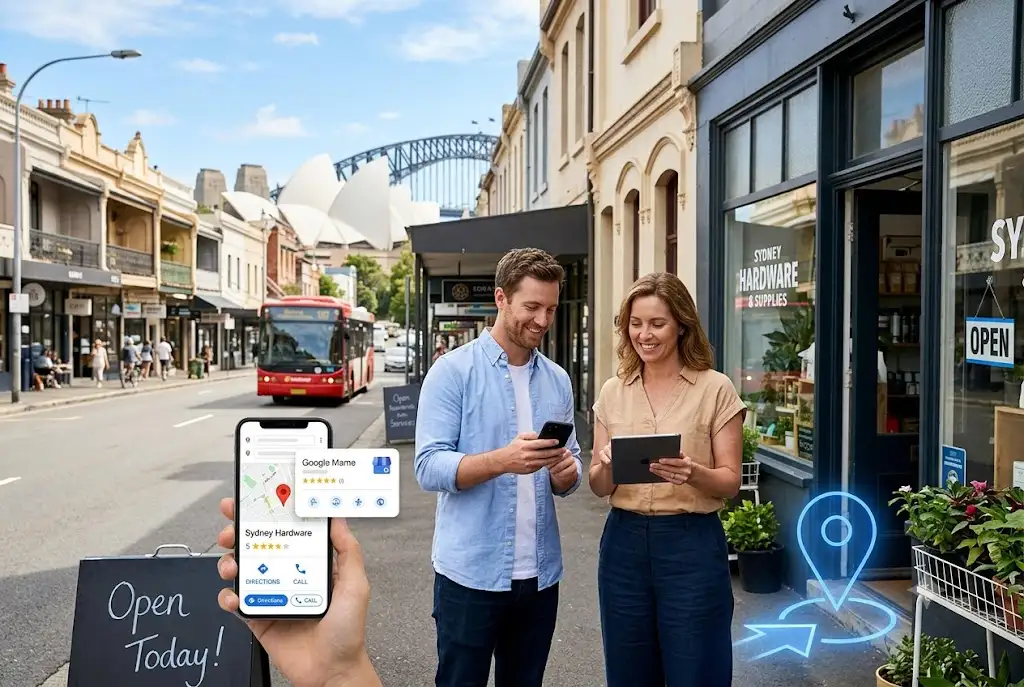
Local SEO helps businesses show up in search results when local customers search for products or services nearby. Most people now search online before choosing a local business — often on mobile or Google Maps — so being visible in local search is essential. Local SEO places your Sydney business in front of nearby customers precisely when they’re ready to buy, call, or visit. 


What Is Local SEO?

Local SEO focuses on improving a business’s visibility in search engine results for location-based searches. Key components include:

  • Google Business Profile: The free listing (formerly Google My Business) that displays business name, address, hours, photos, reviews, and actions like call or directions.
  • Google Maps: The map results users see for location queries; visibility here drives foot traffic and calls.
  • Local Pack: The group of 3 (or more) local businesses that appear prominently under the map on Google search results for local queries.
  • Organic local results: Traditional search listings that are optimized for local intent and often include location-specific pages.
  • Local keywords: Search terms that signal local intent, like “electrician Sydney,” “best cafe near me,” or “prestressed concrete suppliers Sydney.”


Why Local SEO Matters for Small Businesses in Sydney

Reach Customers Searching Nearby

Most people search online before visiting a nearby business. Many searches include “near me” or a suburb name (e.g., “St Leonards track roller supplier”). Local SEO connects you to customers actively searching for your products or services in Sydney and surrounding areas.

Improve Google Maps Visibility

Many customers use Google Maps as their first step. Ranking higher in Google Maps increases visibility for directions, calls, and website clicks. Optimizing your Google Business Profile and building local citations directly improves Maps rankings.

Build Trust Through Reviews

Customer reviews are a major ranking signal and trust indicator. High-quality, recent reviews improve click-through rates, influence purchase decisions, and demonstrate credibility to both Google and potential customers.

Increase Website Traffic

Local SEO drives targeted organic traffic — users with purchase intent who are nearby. Well-optimized local pages and service pages increase relevant website visits that convert into calls, form submissions, or in-store visits.

Generate More Phone Calls & Leads

Local search results often show phone, directions, and “call” actions. When your listing appears in the Local Pack or Maps, users can contact you instantly, which increases leads and closes sales faster.

Compete Against Larger Businesses

Local SEO levels the playing field. Small businesses with strong local optimization, good reviews, and targeted content can outrank large national brands for local queries.

Better ROI Than Traditional Advertising

Local SEO provides lasting visibility at lower cost per lead than many offline options. Once optimized, local listings and pages continue to attract traffic without the recurring cost of ads.

Benefits of Local SEO

  • Higher Google rankings: Better placement in Local Pack and organic results.
  • More qualified leads: Users are actively searching with local intent.
  • Increased foot traffic: Directions and Maps visibility bring customers to your door.
  • Better online reputation: Reviews and citations build trust.
  • Higher conversion rates: Local intent users convert more than general searchers.
  • Cost-effective marketing: Evergreen benefits that scale over time.
  • Long-term business growth: Ongoing optimization builds a steady pipeline of local customers.

Key Local SEO Strategies

Google Business Profile optimization

  • Complete all profile fields: business name, accurate address (or service area), phone, categories, hours, services, and business description.
  • Use primary and secondary categories that match your services (e.g., “Construction material supplier,” “Concrete contractor”).
  • Add high-quality photos: exterior, interior, team, products, and project photos.
  • Publish regular GBP posts to promote offers, blog posts, or events.
  • Enable and respond to messages and calls promptly.

Local keyword research

  • Target keywords that include “Sydney” or suburbs (e.g., “local business SEO Sydney,” “prestressed concrete Sydney”).
  • Use intent-based phrases: “buy,” “hire,” “near me,” “service,” plus location modifiers.
  • Map keywords to pages: homepage for brand + city, service pages for specific offerings, and location pages for suburbs.

On-page SEO

  • Include local keywords in page titles, meta descriptions, headers, and body content naturally.
  • Add NAP (name, address, phone) in structured places: site footer and contact page.
  • Create dedicated location pages for different Sydney suburbs or service areas.

Location pages

  • Each page should include unique, local-focused content: service details, local testimonials, images of local projects, and a map.
  • Avoid duplicate or low-quality content across locations.

Local citations

  • List your business consistently across reputable directories: Yellow Pages, TrueLocal, Yelp, Bing Places, Apple Maps, and industry-specific directories.
  • Ensure NAP consistency across all listings to avoid confusion and ranking penalties.

Review management

  • Ask satisfied customers for reviews and provide simple review links.
  • Respond to all reviews — positive and negative — professionally and promptly.
  • Monitor review platforms and address service concerns to protect reputation.

Mobile-friendly website

  • Ensure responsive design: most local searches happen on mobile.
  • Optimize CTAs for mobile: click-to-call buttons, easy directions, and fast forms.

Website speed

  • Fast-loading pages boost user experience and search rankings. Compress images, use caching, and minimize slow scripts.

Schema markup

  • Add local business schema to highlight address, phone, operating hours, and geo-coordinates to search engines.
  • Use structured data for products, services, and reviews to improve rich snippet eligibility.

Internal linking

  • Link from blog posts and service pages to location pages and contact pages to distribute authority and help users find local info quickly.

Local backlinks

  • Earn links from local partners, suppliers, local news sites, industry associations, and chambers of commerce.
  • Sponsorships, events, or case studies featuring local projects can attract high-value local links.

Regular blog content

  • Publish content that targets local needs, FAQs, case studies, and project highlights in Sydney suburbs.
  • Content ideas: “NSW heavy machinery upkeep essentials: safety protocols, scheduled inspections, genuine parts sourcing, skilled technicians, and proactive maintenance planning.”

Common Local SEO Mistakes

  • Inconsistent NAP: mismatched addresses, phone numbers, or business names across directories.
  • Ignoring reviews: not responding or failing to solicit reviews from happy customers.
  • No location pages: relying on a single page for multiple suburbs reduces relevance.
  • Poor mobile experience: slow, unresponsive sites lose mobile customers.
  • Slow website: high bounce rates from slow loads reduce rankings.
  • Duplicate content: copying the same text across location pages or directory listings.
  • Missing local keywords: failing to target “Sydney” or suburb-level search terms.

Why Choose ZeekWeb for Local SEO in Sydney

ZeekWeb offers tailored local SEO solutions for Sydney small businesses, combining technical expertise and local market understanding:

  • Customized Local SEO strategies: audits and bespoke plans aligned with your business goals.
  • Google Business Profile optimization: profile setup, optimization, posts, and review management.
  • Technical SEO: site speed, mobile optimization, schema markup, and site architecture fixes.
  • Local keyword research: suburb- and service-specific keyword mapping and content plans.
  • Content optimization: on-page edits, location pages, and blog content to attract local traffic.
  • Local citation building: consistent listings across high-quality directories and niche industry platforms.
  • Performance tracking: regular reports on rankings, traffic, and conversions.
  • Transparent reporting: clear KPIs and actionable recommendations tailored to Sydney markets.

FAQ

AI AUTOMATION QUESTIONS ANSWERED

Everything you need to know before getting started with AI automation.

AI can automate an enormous range of processes including: lead capture and qualification, customer service and support, appointment booking, email and follow-up sequences, CRM data entry and updates, document processing and approvals, social media management, reporting and analytics, inventory management, onboarding workflows, and much more. During your free audit, we'll identify exactly which of your processes are the best candidates for automation.

Implementation timelines depend on complexity. A basic AI chatbot can be live within 5–7 days. The AI Foundation package typically takes 1–2 weeks. The AI Revenue Engine runs 2–4 weeks. Larger Operations Command and Enterprise projects range from 4–10 weeks. We always prioritise getting your highest-ROI automations live first so you see results as quickly as possible.

Not at all. We design all systems to be managed through simple, intuitive interfaces that require no technical knowledge. We also provide full training and documentation for your team, and our ongoing support means you can always call us if you have questions. Your job is to run your business — ours is to handle the technical complexity.

AI automation doesn't replace good people — it frees them from doing robot work so they can focus on higher-value activities that genuinely need human intelligence, creativity, and empathy. Most of our clients find their teams become significantly more productive and satisfied after automation is introduced. AI handles the repetitive, rule-based tasks; your people handle the relationships, strategy, and complex decisions.

Yes — we integrate with virtually every major CRM and business platform including HubSpot, Salesforce, Zoho, Pipedrive, ActiveCampaign, Monday.com, Asana, Xero, MYOB, Shopify, WooCommerce, and hundreds more via APIs, n8n, Make, and Zapier. In cases where a direct integration isn't available, we build custom connectors. We'll assess your existing tech stack during the discovery phase and confirm all integrations before any build begins.

Get Started

READY TO BUILD THE FUTURE OF YOUR BUSINESSES

Partner with ZeekWeb Australia to create intelligent digital systems that drive long-term business growth. Your first consultation is completely free.

No commitment required
Response within 24 hours
100% transparent pricing

START YOUR PROJECT

Fill in your details and we'll be in touch within 24 hours.